
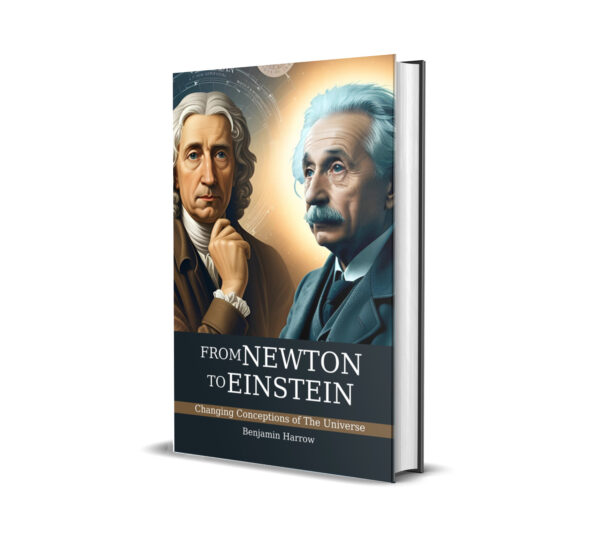
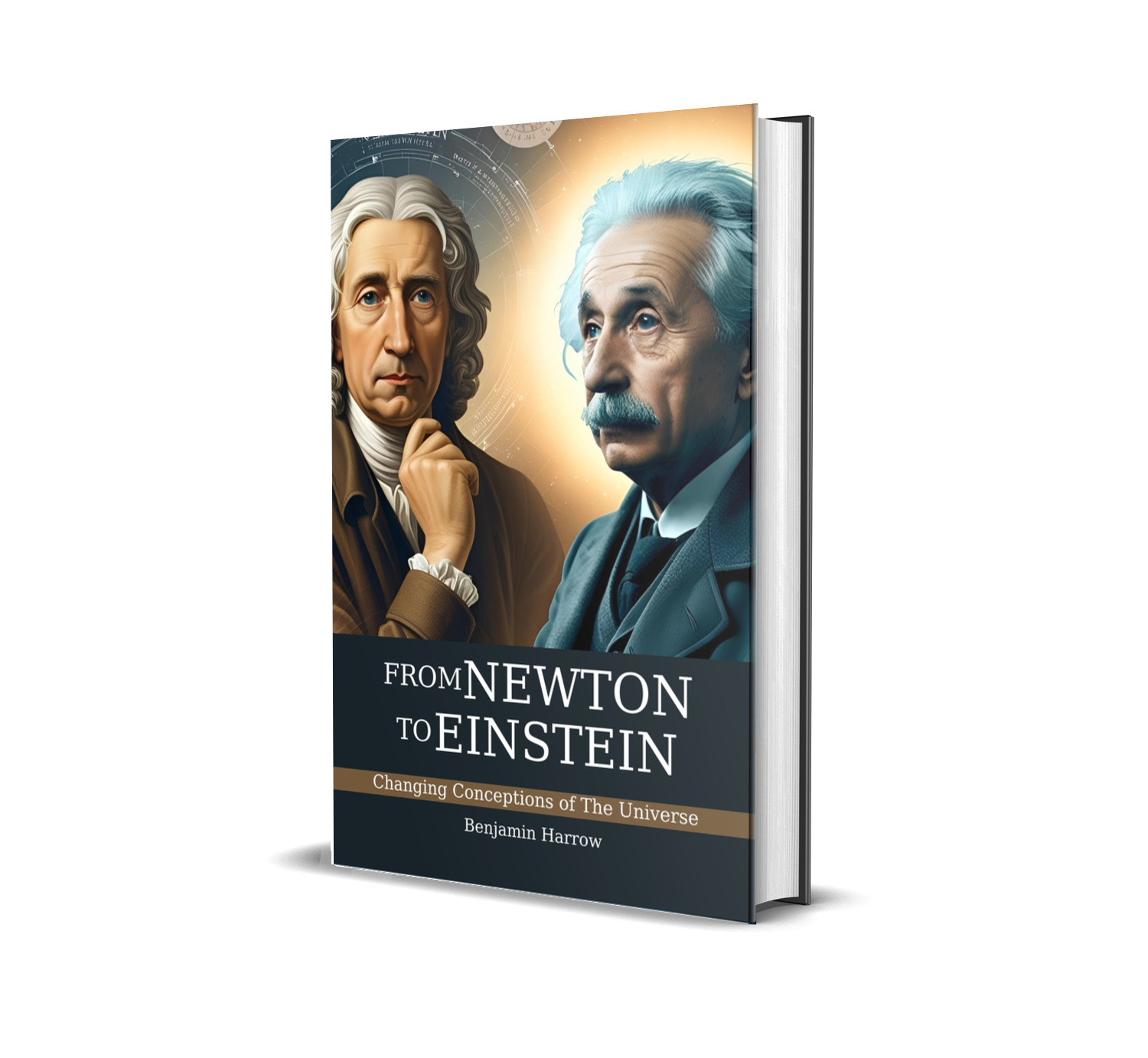
Excerpt from Newton to Einstein: Changing Conceptions of the Universe. Emsmm’s contributions to our ideas of time and space, and to our knowledge of the universe in general, are of so momentous a nature that they easily take their place among the two or three greatest achievements of the twentieth century. This little book attempts to give, in popular form, an account of this work. As However, Einstein’s work is so largely dependent upon the work of Newton and Newton’s success.
-5%
Based on 0 reviews
Be the first to review “From Newton to Einstein : Changing Conceptions of The Universe”
Related products
-
Uncategorized, political treatise
The Prince by Niccolò Machiavelli (Hardback)
- Page : 98
- ISBN : 9789356520516
- Dimensions : 22.5 x 14.5 x 1.1 cm
It is not titles that honor men, but men that honor titles.?How can a prince rise to power?What must he do to remain in it?What is expected of a good ruler?Which is better?to be feared or to be loved?Offering an explicit insight into the minds of a ruler, here is a practical handbook and a political treatise exploring the attainment, maintenance and utilization of political power in the Western world. It warns that if a state is not governed properly it shall collapse on the ruler.It describes the art and craft of war. It elaborates on the qualities of a prince and his prudence. It gives lessons in statesmanship and on judging the strength of principalities. One of the first works of modern political philosophy, Niccolò Machiavelli?s the Prince expounds on why the princes of Italy lost their states. He dedicates the book to Lorenzo de? Medici, believing that it is he who can bring salvation for Italy. Full of historical references, the book continues to influence its readers and the hidden ruler in them.
SKU: n/a -
Uncategorized
The Diamond Sutra by William Gemmell (Hardback)
- Page : 116
- ISBN : 978-8182478770
- Dimensions : 22.5 x 14.5 x 1.2 cm
Zen Buddhism is often said to be a practice of mind-to-mind transmission without reliance on texts –in fact, some great teachers forbid their students to read or write. But Buddhism has also inspired some of the greatest philosophical writings of any religion, and two such works lie at the center of Zen: The Heart Sutra, which monks recite all over the world, and The Diamond Sutra, said to contain answers to all questions of delusion and dualism. This is the Buddhist teaching on the perfection of wisdom and cuts through all obstacles on the path of practice. As Red Pine explains: The Diamond Sutra may look like a book, but it’s really the body of the Buddha. It’s also your body, my body, all possible bodies. But it’s a body with nothing inside and nothing outside. It doesn’t exist in space or time. Nor is it a construct of the mind. It’s no mind. And yet because it’s no mind, it has room for compassion. This book is the offering of no mind, born of compassion for all suffering beings. Of all the sutras that teach this teaching, this is the diamond.
SKU: n/a -
Uncategorized
Tarzan Lord Of The Jungle [hardcover] Edgar Rice Burroughs
Cruel slave traders had invaded the jungle of Tarzan of the Apes. Now they were headed toward a fabled empire of riches which no outsider had ever seen, intent on looting. And toward the same legendary land was stumbling the lost James Blake, an American whom Tarzan had vowed to rescue. Following their spoors, the ape-man came upon the lost Valley of the Sepulcher, where the Knights Templar still fought to resume their Holy Crusade to free Jerusalem. Soon Tarzan, true Lord of their ancient motherland, was armed with a lance and shield, mixed into their jousting and ancient combat. It was then that the slavers struck!
SKU: n/a -
Uncategorized, Algebra trigonometry, Hindi Literature, Mathematics, Self Help
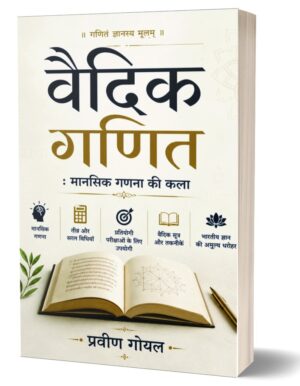
Vaidik Ganit : Mansik Ganana Ki Kala by Praveen Goyal (Paperback) (Copy)
 Uncategorized, Algebra trigonometry, Hindi Literature, Mathematics, Self Help
Vaidik Ganit : Mansik Ganana Ki Kala by Praveen Goyal (Paperback) (Copy)
गणित केवल अंकों का खेल नहीं, बल्कि सोचने और समस्याओं को सरल बनाने की कला है। वैदिक गणित : मानसिक गणना की कला भारतीय ज्ञान परंपरा के उन अद्धुत गणितीय सिद्धांतों को सरल भाषा में प्रस्तुत करती है जिनकी सहायता से जटिल गणनाएँ भी कुछ ही क्षणों में की जा सकती हैं। इस पुस्तक में वैदिक गणित के प्रमुख सूत्रों, मानसिक गणना की तकनीकों, तीव्र जोड़, घटाव और गुणा की सरल विधियों का विस्तूत एवं व्यावहारिक परिचय दिया गया है।
SKU: abhpubvgmgkk


![Tarzan Lord Of The Jungle [hardcover] Edgar Rice Burroughs](https://abhishekpublications.com/wp-content/uploads/2024/12/1-23-300x474.jpg)
There are no reviews yet.